
"diseases and insect pests"
500 article(s) found

Flavor description of Yunnan Tieka Coffee Bean introduction to the characteristics of varieties produced in the manor area
The so-called new variety of Yunnan Tieka coffee beans actually refers to catimor (Katimo), which is a hybrid of timor and Arabica from the Roberta family. Compared with the old varieties, it lacks rich aroma and taste, and has a relatively shallow smell of grass and soil, but it has the advantages of resistance to diseases and insect pests, easy to manage, high yield and the highest yield per mu can reach 350kg.

What are the differences between Arabica and Robusta coffee varieties
The most common kind of coffee we have on the market is two kinds of Arabica Calabasta, and they are actually two tree species, that is, coffee trees. Let's first take a look at the difference between these two kinds of coffee. Alabica (CoffeaArabica) Robusta (CoffeaRobusta) planting conditions are higher (600 to 2000 meters above sea level), poor resistance to diseases and insect pests, vulnerable to damage.

Coffee is allowed to contain 10% cockroaches? I believe you, ghost!
In March last year, NHS doctor KaranRaj posted a short video on the TikTok account Dt.Karan saying that most pre-ground coffee sold in supermarkets / stores contained cockroaches (avoiding further reading would cause discomfort, hereinafter referred to as Ah Qiang). These coffee beans are being studied.

The planting of coffee trees
When tasting a single cup of coffee, you will see some information about the variety in addition to the country, region and geographical and climatic conditions. Such as Arabica, Robusta, Bourbon and so on.

Coffee beans are classified to the root of only two kinds of Arabica coffee beans if the scented perfume
Professional coffee knowledge exchange more coffee bean information please follow the coffee workshop (Wechat official account cafe_style) front street-coffee bean variety profile Arabica is originally from Ethiopia, its coffee bean production accounts for 70% of the world's production; the world-famous Blue Mountain Coffee, Mocha Coffee and so on, are almost all Arabica species. Coffee trees planted in Arabica are suitable for large temperature differences between day and night.
Arabica beans-- A family "genealogy" like rising day and moon
Arabica, (scientific name Coffea arabica, Coffee Arabica), also known as Arabica coffee, is an indigenous species of coffee grown on the Abyssinia Plateau of Ethiopia (present-day Ethiopian Plateau). According to textual research, it is the first artificially cultivated coffee variety in the world, one of the most important coffee tree species, and occupies the global coffee.

Java coffee flavor Java coffee characteristics
Among the Asian coffee-producing countries, Indonesia is a very noteworthy one. Indonesia is an island country in the Indian Ocean, the islands are distributed on both sides of the equatorial line, of which three islands: Java, Sumatra and Sulawesi produce the world's important coffee. In the mid-17th century, the Dutch brought coffee trees to Ceylon (Sri Lanka) and Java, Indonesia. India in the 18th century
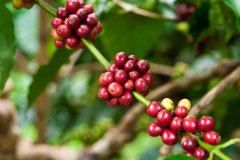
Yemeni farmers abandon coffee, Omar coffee story, coffee bean price
Experts point out that if the trend of farmers abandoning coffee and planting Carter grass is not improved, Yemeni coffee will have no tomorrow. Experts concluded that the reasons for the disadvantages of coffee crops are as follows: drought and water shortage, lack of advanced irrigation systems, increased planting costs, serious diseases and insect pests, cheaper imported coffee and better profits than coffee. It seems that the problem is very complicated. It may be difficult to increase coffee production in Yemen in a short period of time.

Introduction to the flavor description of grinding scale in Robusta Coffee Bean Manor
Description of Grinding scale Flavor in the area of Robusta Coffee Bean Manor taste description the output of Robusta species accounts for 25% 35% of coffee bean production. Its main producing country is Indonesia (one of its coffee beans is a kind of coffee beans processed by washing method, which is a hybrid between Robusta and Arabica, and is the only coffee bean that can be used as a single drink in the Chinese market.

Tanzanian coffee culture the origin of Tanzanian coffee
Due to political instability and rampant diseases and insect pests, the coffee industry in Tanzania has been damaged, leading to a decline in the overall level of coffee and instability in quality, which in turn lead to lower prices, which are usually the result of a further decline in the coffee industry. What's more, it is estimated that more than 12% of the Arabica coffee grown in northern Tanzania from 1969 to 1985 has gone.

Indonesia Java Coffee Flavor description Variety characteristics of High-quality Coffee beans
Java produces only a small amount of Arabica beans, most of which were imported from Africa after the rust disaster. This coffee has a strong bitter taste after roasting, but the aroma is extremely light. Although the acidity is low and the taste is delicate, it is rarely used for direct drinking. It is often used to mix mixed coffee or to make instant coffee. Diseases and insect pests are really a powerful thing, it makes Pakistan
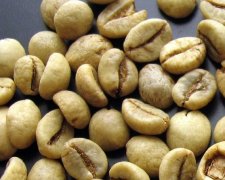
Robusta's secret.
[guide] "Robusta" coffee, commonly known as "thick beans", can be grown at low elevations (200 to 800 meters above sea level), has strong resistance to diseases and insect pests, is not vulnerable to agricultural pests, has a high annual output per unit area, and is harvested in large quantities by machine. in general, the cost of production is much lower than that of Arabica. "Robusta" coffee is commonly known as "stout beans", at low elevations (200 above sea level)
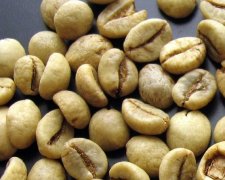
Robusta's secret.
[guide] "Robusta" coffee, commonly known as "thick beans", can be grown at low elevations (200 to 800 meters above sea level), has strong resistance to diseases and insect pests, is not vulnerable to agricultural pests, has a high annual output per unit area, and is harvested in large quantities by machine. in general, the cost of production is much lower than that of Arabica. "Robusta" coffee is commonly known as "stout beans", at low elevations (200 above sea level)
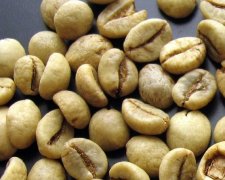
Robusta's secret.
[guide] "Robusta" coffee, commonly known as "thick beans", can be grown at low elevations (200 to 800 meters above sea level), has strong resistance to diseases and insect pests, is not vulnerable to agricultural pests, has a high annual output per unit area, and is harvested in large quantities by machine. in general, the cost of production is much lower than that of Arabica. "Robusta" coffee is commonly known as "stout beans", at low elevations (200 above sea level)

Costa Rican coffee industry reduced due to climate
Due to the decline in coffee prices on the international market, Costa Rican coffee exports totaled US $306 million in 2015, down 26% from US $412 million in 2012, Costa Rica reported on May 12. In the first quarter of 2016, the average world price of coffee was $1.14 per liter, down 26 per cent from the same period in 2014. Affected by climate change and diseases and insect pests at the same time, the coffee growing area of Colombia
The best coffee in the world
When tasting single-origin coffee, you will see some information about the variety in addition to the country of origin, production area and geographical and climatic conditions. Arabica, Robosta, Bourbon, etc. For coffee flavor, of course, the difference in the production area is relatively large. Variety differences become interesting when discussing the variety of beans produced in the same region.
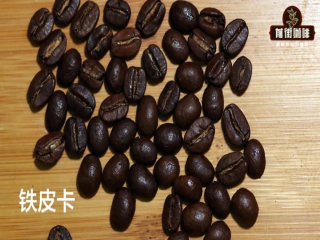
The story and characteristics of iron pickup coffee beans are there any varieties of iron pickup coffee that belong to Arabica?
Typica is one of the most iconic coffee varieties in the world. It can be traced back to the birthplace of Arabica coffee in Ethiopia and is essential for understanding the coffee we drink today. Its sensitivity to diseases and insect pests makes it an unpopular choice. However, consider its
Costa Rica urgently needs to stimulate the coffee industry
Due to the decline in coffee prices on the international market, Costa Rican coffee exports totaled US $306 million in 2015, down 26% from US $412 million in 2012, Costa Rica reported on May 12. In the first quarter of 2016, the average world price of coffee was $1.14 per liter, down 26 per cent from the same period in 2014. Affected by climate change and diseases and insect pests at the same time, the coffee growing area of Colombia

The light flavor of Java coffee describes the treatment method of grinding degree and the degree of baking in the manor area.
Java produces only a small amount of Arabica beans, most of which were imported from Africa after the rust disaster. This coffee has a strong bitter taste after roasting, but the aroma is extremely light. Although the acidity is low and the taste is delicate, it is rarely used for direct drinking. It is often used to mix mixed coffee or to make instant coffee. Diseases and insect pests are really a powerful thing, it makes Pakistan
Basic knowledge about coffee trees
Breed of coffee: When you taste single-origin coffee, you will see some information about the variety in addition to the country of origin, production area and geographical and climatic conditions. Arabica, Robosta, Bourbon, etc. For coffee flavor, of course, the difference in the production area is relatively large. When it comes to different varieties of beans produced in the same locality, the differences between varieties change.